Lonely Zebra
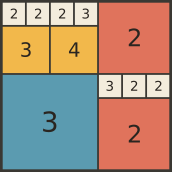
Both colours have to multiply out to the same number, and then to the largest that shape allows.

Play Lonely Zebra Share or embed
- Grades
- 3–6
- Subjects
- Multiplying & Dividing, Shapes & Space, Logic
- Kind
- Puzzle
What it is
Zebra’s field with nobody to play against. Every hexagon is painted black or white. Hexagons of one colour that touch make a herd, and a colour is worth its herd sizes multiplied together. There are three ways to play: make black alone as large as possible; make the two colours worth the same, and then as large as possible; or make them differ by exactly one, and then as large as possible.
The rules
What it gives you to practise
The same multiplication insight as Zebra with the opponent taken away, so there is nothing to react to and nowhere to hide: every board is a question about how one fixed shape can be cut. The three ways of playing run through the same loops, diamonds and triangles, so only what the numbers have to do changes from one to the next — and two colours one apart can never be cut alike, because neighbouring numbers share no factor. The largest score each board allows was found by a computer trying every way of painting it.
In a classroom
The maximum is never printed on the board before somebody reaches it, and that is deliberate. A class can hunt for a number nobody has told them, and the board will say when they have it.
 Gozen
 Zebra
 Diversity City